
How to Use an Interactive Whiteboard for Online Classes
Updated October 2026
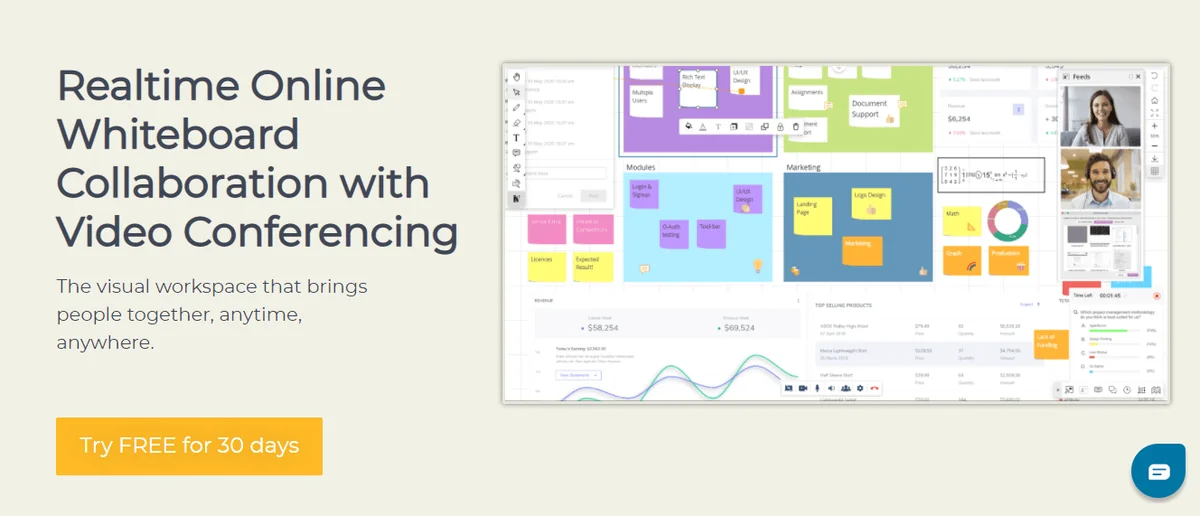
To use an interactive whiteboard for online classes, create one online white board per class in HuddleIQ, add your students to it, start the video call from inside the board, and plan the lesson so students write on the shared canvas every few minutes instead of just watching you. The software is the easy part. What makes a lesson work is the rhythm: a short explanation you mark up with highlights and arrows, then a task students do on the board, then a quick poll or vote that makes every student recall what you just taught. This guide covers the setup step by step and then gives you a lesson structure built on that rhythm.
We wrote it for one reader in particular: a secondary or university teacher running a live class over video who can see that students are switching off behind muted microphones and wants them doing the thinking, not only listening. If that is you, the first half covers the research behind the lesson structure and the second half covers each click in HuddleIQ.
What is an interactive online white board, and why use one for live classes?
An online white board is a shared digital canvas that everyone in a session can see and edit in real time from a browser. In a live class it does the job of the classroom board and of students’ exercise books at once, because the teacher and every student can write on the same page.
That second job is the reason to use one. Video conferencing on its own pushes a lesson towards lecturing: one person talks, everyone else watches. The strongest evidence on what happens when students work during a lesson, instead of only listening, comes from a large meta-analysis. Freeman et al. (2014), in the Proceedings of the National Academy of Sciences, pooled 225 studies of undergraduate science, engineering and mathematics courses. They found that exam and concept-inventory performance “increased by 0.47 SDs under active learning”, and that failure rates were 21.8% under active learning against 33.8% under traditional lecturing. The authors put it this way: active learning “would raise average grades by a half a letter”.
Those were mostly in-person courses. Still, the principle carries over directly to live online teaching, and an interactive whiteboard is the obvious place for that student activity to happen. Every sticky note, arrow or answer a student adds is visible to you as they add it, so you can see who is stuck without asking anyone to unmute.
The 6-move online whiteboard lesson map
The 6-move online whiteboard lesson map is a framework we built for this post. It turns six findings from learning research into six things you do on the board, and it pairs each one with the HuddleIQ tool that does the job. The research behind it is Freeman et al.’s active-learning meta-analysis, Richard Mayer’s multimedia learning principles (as summarised by Dartmouth College’s teaching resources), and the retrieval-practice research reviewed by Pastötter and Bäuml (2014).
| Move | What you do on the board | Research basis | HuddleIQ tool |
|---|---|---|---|
| 1. Chunk | Split the lesson into short sections, each on its own area of the board or its own slide | Segmenting principle: people learn better “in user-paced segments, rather than in one continuous unit” (Dartmouth) | Presentation Mode slides; Containers |
| 2. Signal | Highlight, circle and draw arrows to the one thing that matters while you talk | Signalling principle: people learn better “when there are cues that emphasize information that is more important” (Dartmouth) | Pen and highlighter; Shapes and arrows |
| 3. Place | Put labels right next to the part of the diagram they describe | Spatial contiguity: learning is better “when corresponding images and text are placed close together” (Dartmouth) | Sticky notes; text on imported documents |
| 4. Sync | Draw or reveal each element as you explain it, not before | Temporal contiguity: learning is better when visuals appear “at the same time as they are spoken about” (Dartmouth) | Live annotation during the video call |
| 5. Do | Hand the canvas to students for a timed task | Active learning: +0.47 SD on exams, lower failure rates (Freeman et al., 2014) | Real-time multi-user editing; Task Timer |
| 6. Recall | Close each section with a question students answer from memory | Retrieval practice: retrieving material improves long-term retention “more than repeated study” (Pastötter & Bäuml, 2014) | Polls; Votes |
Moves 1 to 4 cover how you present. Moves 5 and 6 cover what students do. A lesson that only uses the first four is a better lecture, but it is still a lecture. The board earns its place in moves 5 and 6.
Move 6 has extra support from online teaching in particular. Pastötter and Bäuml’s review describes a study by Szpunar and colleagues using online video lectures, where testing students on earlier sections “increased the number of correctly answered segment 4 questions” and also “reduced both test anxiety and subjectively experienced mental effort” (Pastötter & Bäuml, 2014). Short, low-stakes recall checks between segments help students learn the next segment, not just remember the last one.
How do you set up an online white board for a class?
Setting up takes four steps: create an account, apply for the Education Free plan if you are eligible, create a board for the class, and group your boards into projects. Teachers with a verified school or university email get the full education plan at no cost.
Step 1: Create an account
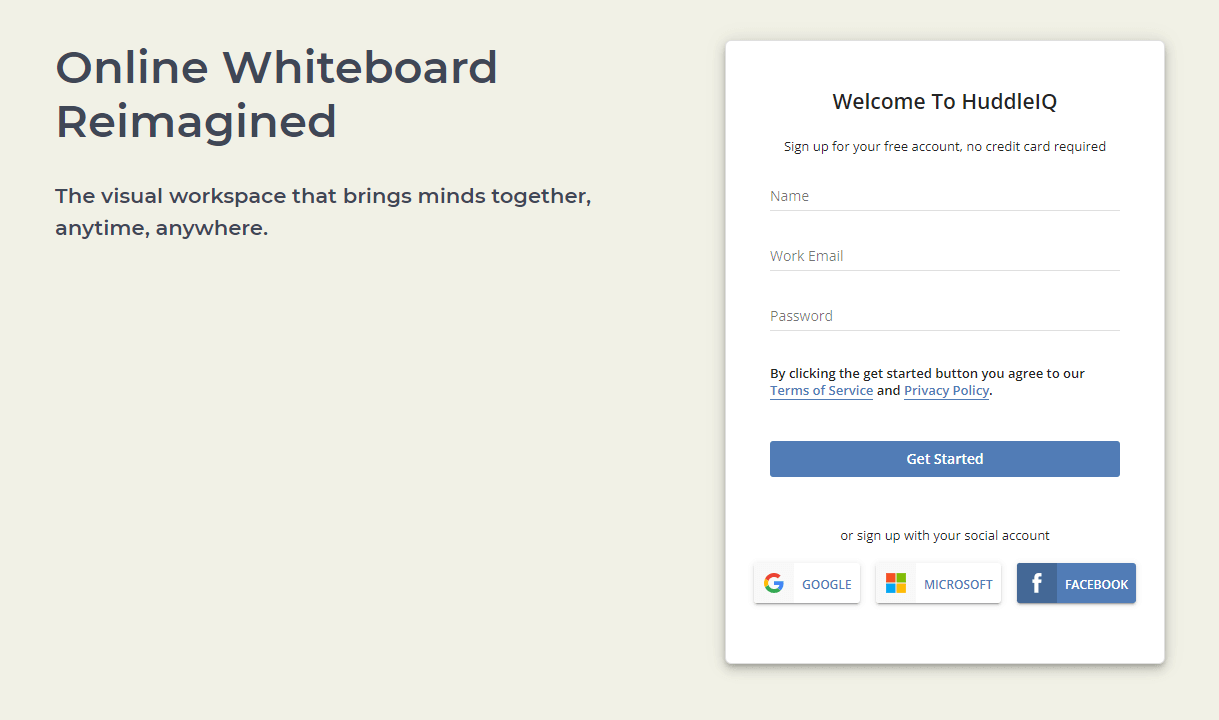
Click “Sign Up for Free”, enter your name, email address and password, and click “Create An Account”. You can also sign up with a Google, Facebook or Microsoft account. HuddleIQ runs in the browser, so nothing needs installing. According to the supported browsers and devices page, it works on Windows, Mac, Chromebooks, Linux and Android tablets in current versions of Chrome, Edge, Opera, Firefox, Brave and DuckDuckGo.
Step 2: Apply for the Education Free plan
The HuddleIQ Education Free plan is free forever, with no credit card needed. It includes unlimited boards, up to 50 seats, up to 30 guest licences, 50 view-only visitors, 5 GB of storage (100 MB per user), built-in video calls and more than 100 templates, lesson plans among them. To qualify you need a verified educational email address. HuddleIQ recognises more than 8,000 educational domains worldwide, including .edu, .ac.uk, .edu.au and .ac.jp addresses. K-12 teachers and administrators, university lecturers, students, teaching assistants, tutors and school staff are all eligible. You can verify your educational email here.
Step 3: Create a board for the class
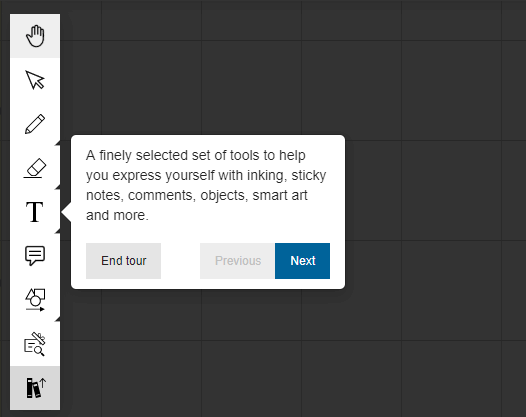
Log in and click “Create a New Board”, then give it a name. Each class you teach is saved on your dashboard as a board you can reopen at any time. First-time users get a short guided tour of the board and its toolbars.
Step 4: Organise boards into projects
If you teach several groups, use one board per lesson or per unit and group them into Projects, which work like folders. The education page suggests organising boards “by class, semester, or subject”. Projects can be private or shared. A shared project for a teaching team means a colleague covering your class can find this week’s board straight away.
How do students join an online white board class?
Students join by invitation. Add them to your organisation as members or guests and invite them to the board by email, or share a link. People who only need to watch, such as an observer or a visiting colleague, can join as visitors through a link without registering.
HuddleIQ has three kinds of participant. The differences matter for planning a class, so here they are side by side, based on the members, guests and visitors help page:
| Participant | Registered account | Dashboard access | Board roles available | Good classroom fit |
|---|---|---|---|---|
| Member | Yes | Full: can create projects, boards and invitations | Host, facilitator, editor, commentator, viewer | Teachers, co-teachers, teaching assistants |
| Guest | Yes | Yes, but cannot create projects, boards or invitations | Editor, commentator, viewer | Students who write on the board every lesson |
| Visitor | No | None; joins a specific board by link | Set by the invitation link | Observers, parents at a showcase, a visiting speaker |
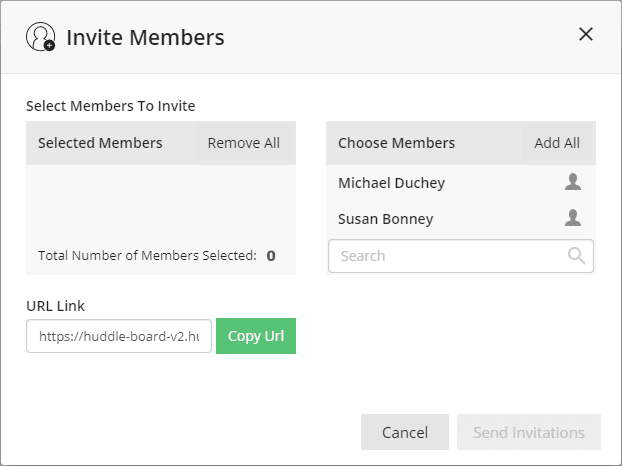
To invite people from the dashboard, find the board, click the three vertical dots, choose “Invite Members”, select who to invite and click “Send Invitations”. From inside an open board, use the Invite icon on the right of the top bar. Before you send email invitations, make sure students have been added under the dashboard’s administration section and have confirmed their email addresses. The create and manage an invite guide has the details.
Board roles let you control what happens during the lesson. Give students the commentator role while you explain, so they can comment but not move your diagram, then switch them to editor for the “Do” move. The board roles and permissions page lists what each role can do.
How do you run the live lesson on the board?
Start the video call from inside the board, so your face, voice, screen and the canvas sit in one browser tab. Then use Presentation Mode to keep every student looking at the same section while you teach.
HuddleIQ includes video conferencing on the board itself. In the product’s own words, you can “talk face-to-face while you work” and “share your screen alongside your webcam”. To start, click the leftmost icon on the bottom-right toolbar and click “Start”. Allow access to your webcam and microphone, and the video toolbar appears at the bottom of the screen with your camera and microphone controls. Because students never leave the board to join a call, you don’t lose the first five minutes of the lesson to students switching windows.
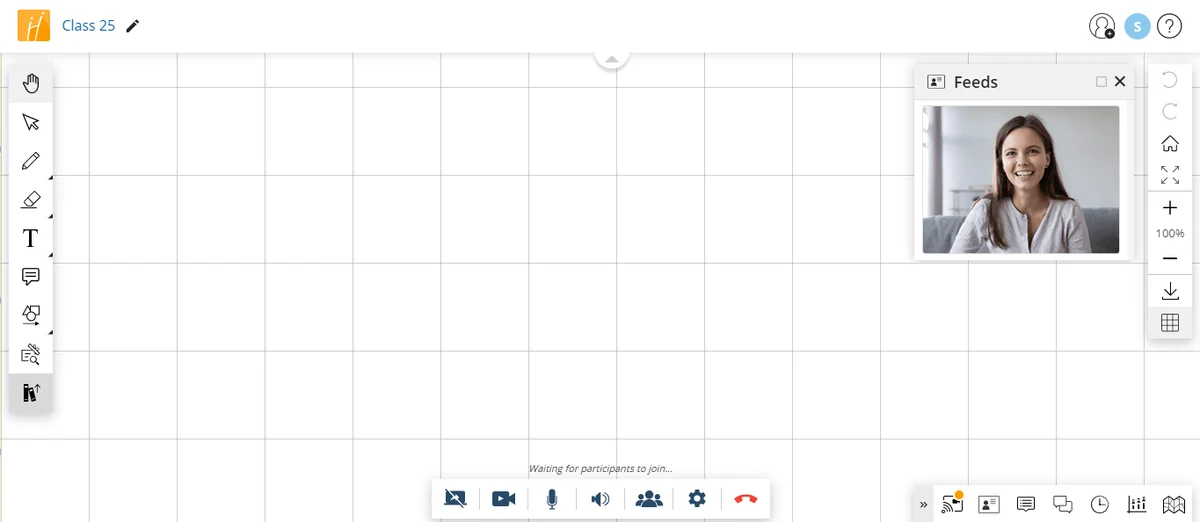
Presentation Mode handles moves 1 and 4 of the lesson map. The help documentation says “attendees see everything you see and only what you see”. A setting called “Strictly What Presenter Sees” means students on bigger screens can’t scroll ahead to the answers. You can step through slides, share your screen, or simply move around the board while everyone follows. Only the presenter, or someone with the host or facilitator role, can end the presentation for everyone.
You can present existing material too. HuddleIQ imports more than 60 document formats, including PDF, Word, Excel, PowerPoint and Google Docs, and you can annotate directly on the document. Students see your page turns and scrolling as they happen, and you can keep the annotations once you finish. That means last year’s slide deck can become a marked-up lesson without being rebuilt. Files can also come straight from Google Drive, OneDrive or Dropbox, and schools that use Microsoft Teams can have HuddleIQ notifications sent to Teams.
Which whiteboard tools matter most for teaching?
Four tools do most of the work in a live class: the pen and highlighter for signalling, shapes and arrows for diagrams, sticky notes for student answers, and the resource library for images. Templates save planning time before the lesson.
- Pen and highlighter. These are the tools for move 2 (Signal). Circle the term, underline the step and draw the arrow while you say it. The pen and highlighter guide covers colours and thickness. If you teach with a drawing tablet or stylus, handwriting worked examples feels the same as it does at a physical board.
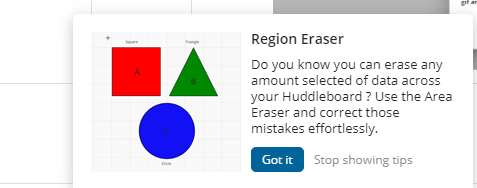
- Erasers. The Stroke Eraser removes single pen and highlighter strokes. The Area Eraser removes everything inside the area you select, which is handy for clearing a worked example so the class can try the next one. See the eraser guide.
- Shapes, arrows and containers. Use these to build activity structures before class: a table for sorting, a labelled diagram, a column per group. Containers keep each group’s section separate.
- Sticky notes. These are the main tool for move 5 (Do). Ask every student to post one answer on a sticky note in their own colour, and the board shows you the whole class’s thinking at a glance.
- Comments and chat. Quieter students can ask questions in chat or leave a comment on a specific object without interrupting.
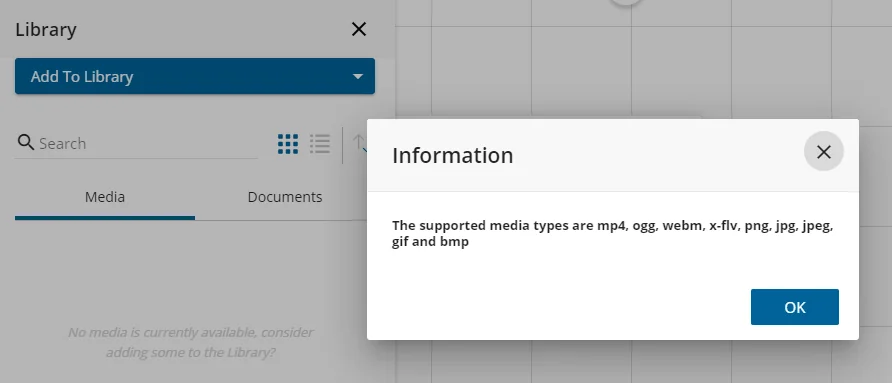
The resource library gives you emojis, icons, images, illustrations and videos inside the platform, so you don’t have to search the web in the middle of a lesson. Upload your own documents, images and videos before class using “Add to Library” at the bottom of the left-hand toolbar. You can also embed YouTube, Prezi, SlideShare, maps or any URL directly on the board.
For planning, the template library has more than 100 layouts, covering lesson plans, brainstorming, mind maps and more. You can also save your own board as a template, so a lesson structure that works once can be reused for every class.
How do you check understanding during an online class?
Use a poll at the end of each lesson segment and a vote when students need to compare ideas. Both run on the board, show results live, and take less than a minute, which makes it realistic to do retrieval practice several times a lesson.
Polls let you ask a question with several answer options, set how long the poll stays open (and lengthen or shorten it while it runs), pause or stop it, and see results live. You can save a poll as a template, which is useful when the same hinge question comes up every year. Ask questions students have to answer from memory, such as “Which of these is the limiting reactant?”, rather than ones they can answer by scrolling up. Answering from memory is where the retrieval-practice benefit comes from.
Votes work on items already on the board. After students post their solutions on sticky notes, run a vote and let the class pick the clearest one. You can set the maximum votes per item and in total. Participants can’t see live results until the vote closes, so students don’t simply copy the early leader.
The Task Timer keeps move 5 tight. Set a countdown in hours, minutes and seconds, add a description such as “Label all four stages”, and choose whether a sound plays at the end. The countdown appears at the top right of every participant’s screen, so nobody has to ask how long is left. The timer, polls and votes are all included on the Education Free plan.
A 50-minute online class on an online white board, minute by minute
Here is the 6-move lesson map applied to one 50-minute lesson. Change the content to suit your subject and keep the pattern: explain, do, recall, repeated in short cycles.
| Minutes | Move | What happens on the board | Tool |
|---|---|---|---|
| 0–5 | Recall | Poll with three questions on last lesson, answered from memory | Polls |
| 5–13 | Chunk, Signal, Sync | Teach segment 1 on an imported slide, annotating live | Presentation Mode, pen, highlighter |
| 13–20 | Do | Students label a copy of the diagram in their own container | Sticky notes, containers, Task Timer (7 min) |
| 20–22 | Recall | One hinge question on segment 1 | Polls |
| 22–30 | Chunk, Signal, Place | Teach segment 2 with a worked example built step by step | Pen, shapes and arrows |
| 30–40 | Do | Pairs solve a similar problem and post their method | Sticky notes, Task Timer (10 min) |
| 40–45 | Recall | Class votes for the clearest method; you mark it up | Votes, highlighter |
| 45–50 | Recall | Exit question; students post one thing they’re unsure about | Polls, comments |
In this plan students are answering, writing or voting for 34 of the 50 minutes. That is the shift the active-learning research points towards. For more classroom routines, see our eight virtual teaching tips and ten ways to organise student group projects on online whiteboards.
What happens to the board after the class ends?
The board stays as it is. HuddleIQ saves after every change, so the lesson, the annotations and every student’s work are kept automatically, and you can reopen the board next lesson and carry on.
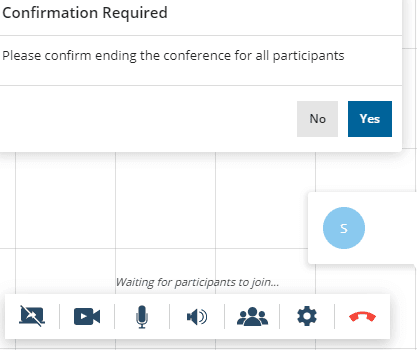
To leave, click the HuddleIQ icon at the top left, or the home button on the right-hand toolbar, and confirm with “Yes”. End the video call from its toolbar first.
The saved board is also useful after class:
- Absent students can open the same board and see the full worked example, annotations included, which is more than a recording gives them.
- Board History restores earlier versions, so an accidental Area Eraser sweep by a student can be undone.
- Export the board to keep a copy for your records or your learning platform.
- The recycle bin keeps deleted boards, which helps if a board was removed by mistake.
If you get stuck at any point, click the question-mark help icon on the right of the top bar, browse the help centre, or check the FAQ. If you still can’t find the answer, you can send a support request from the help section.
What should you look for in any online white board for teaching?
Look for five things: student editing on the same canvas in real time, video built into the board, a way to make everyone follow the teacher, built-in checks for understanding, and a free plan for verified educators. Miro, MURAL, FigJam, Microsoft Whiteboard and HuddleIQ are all online whiteboards. The difference for teachers is how many of these five come in one tab.
| Criterion for a live class | Why it matters (lesson-map move) | HuddleIQ |
|---|---|---|
| Real-time multi-user editing | Students do the work on the shared canvas (Do) | Yes: live cursors and instant changes |
| Video conferencing on the board | No switching between a meeting app and the board | Yes: webcam, microphone and screen share built in |
| Follow-the-teacher presenting | Everyone sees the current segment (Chunk, Sync) | Yes: Presentation Mode with “Strictly What Presenter Sees” |
| Polls, votes and a visible timer | Retrieval checks and timed tasks without another app (Recall, Do) | Yes: all three included |
| Import and annotate existing documents | Reuse existing slides and worksheets (Signal, Place) | Yes: 60+ formats, including PDF and PowerPoint |
| Free plan for educators | Usable for a whole class without a budget request | Yes: Education Free, up to 50 seats, unlimited boards |
| Accessibility | Every student can take part | Keyboard navigation and screen-reader support |
If you are comparing tools in detail, we cover the differences in HuddleIQ vs Miro and our Microsoft Whiteboard alternative guide. For a fuller feature checklist, see top features to look for in an online whiteboard.
Frequently asked questions
What equipment does a teacher need to teach with an online white board?
You need a computer with a webcam, a microphone, a stable internet connection and a current browser such as Chrome, Edge or Firefox. A drawing tablet or stylus is optional but makes handwriting and diagrams easier. Students need a supported device with a browser, and nothing needs installing.
Is HuddleIQ free for teachers?
Yes. The HuddleIQ Education Free plan is free forever for verified educators and students, with no credit card. It includes unlimited boards, up to 50 seats, built-in video calls, 5 GB of storage and more than 100 templates. You need an email address from a recognised educational domain.
Can every student write on the board at the same time?
Yes. Students with the editor role can add sticky notes, draw and type on the board at the same time, and everyone sees each change as it happens. Switch students to commentator or viewer while you are explaining if you want to protect your diagram.
How do teachers stop students scrolling away during an explanation?
Start Presentation Mode. Attendees see exactly what the presenter sees, and the “Strictly What Presenter Sees” setting stops anyone with a larger screen from seeing more than you do. End the presentation when it is time for students to work across the board.
How often should a teacher check understanding in an online class?
Our 6-move lesson map closes every teaching segment, roughly every 8 to 10 minutes, with a short recall question. That spacing follows the segmenting principle and the retrieval-practice research cited above. A poll in HuddleIQ takes under a minute to run.
To try the 6-move lesson map with your next class, create a free HuddleIQ account and verify your educational email to unlock the Education Free plan.
Ready to Collaborate Better?
Try HuddleIQ free and transform how your team works together.
Get Started Free